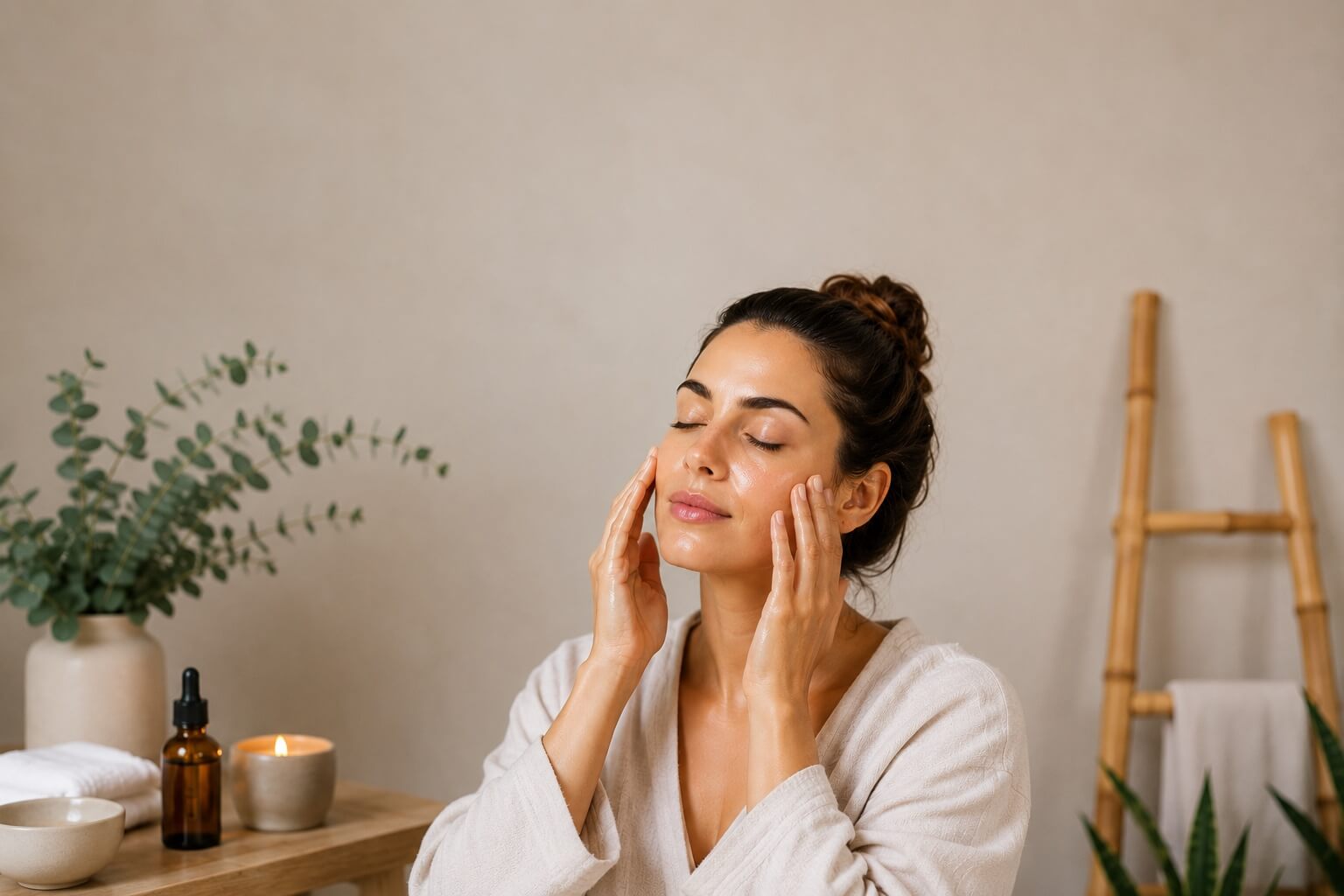
Life can be busy, and it's easy to carry stress in places we don't even notice, especially our face, jaw, forehead, and temples.
If you've ever caught yourself clenching your jaw, furrowing your brow while concentrating, or waking up with facial tension, you're certainly not alone.
A gentle facial massage is a wonderful way to slow down, reconnect with yourself, and create a relaxing self-care ritual at home. In just 10-15 minutes, you can help ease muscle tension, encourage healthy circulation, reduce puffiness, and leave your skin looking refreshed.
While nothing replaces the experience of a professional facial, this simple massage is one of our favourite ways to extend those relaxing benefits between appointments.
What You'll Need
Before you begin, gather a few essentials:
- A clean face and freshly washed hands
- A facial oil, oil-based serum, cleansing balm, or rich moisturiser that provides good slip
- A comfortable place to sit or lie down
- A few quiet minutes without distractions
Tip: If your skin is oily or acne-prone, choose a product that's appropriate for your skin type rather than using heavier oils.
Why Facial Massage Feels So Good
Your face contains more than 40 muscles, many of which become tight during periods of stress or fatigue.
Professional facial massage combines gentle techniques such as acupressure and lymphatic drainage to help:
- Relax tight facial muscles
- Encourage healthy circulation
- Reduce temporary puffiness
- Ease jaw and forehead tension
- Promote relaxation and stress relief
- Enhance the absorption of skincare products
The massage below is inspired by techniques taught through professional esthetics training and is designed to be gentle, relaxing, and easy to follow at home.
Before You Begin
Take a few slow, deep breaths.
Warm your chosen facial oil or moisturiser between your palms before applying it evenly across your face and neck.
Always use light pressure and allow your fingers to glide over the skin rather than pulling or dragging it.
Step 1: Relax the Forehead
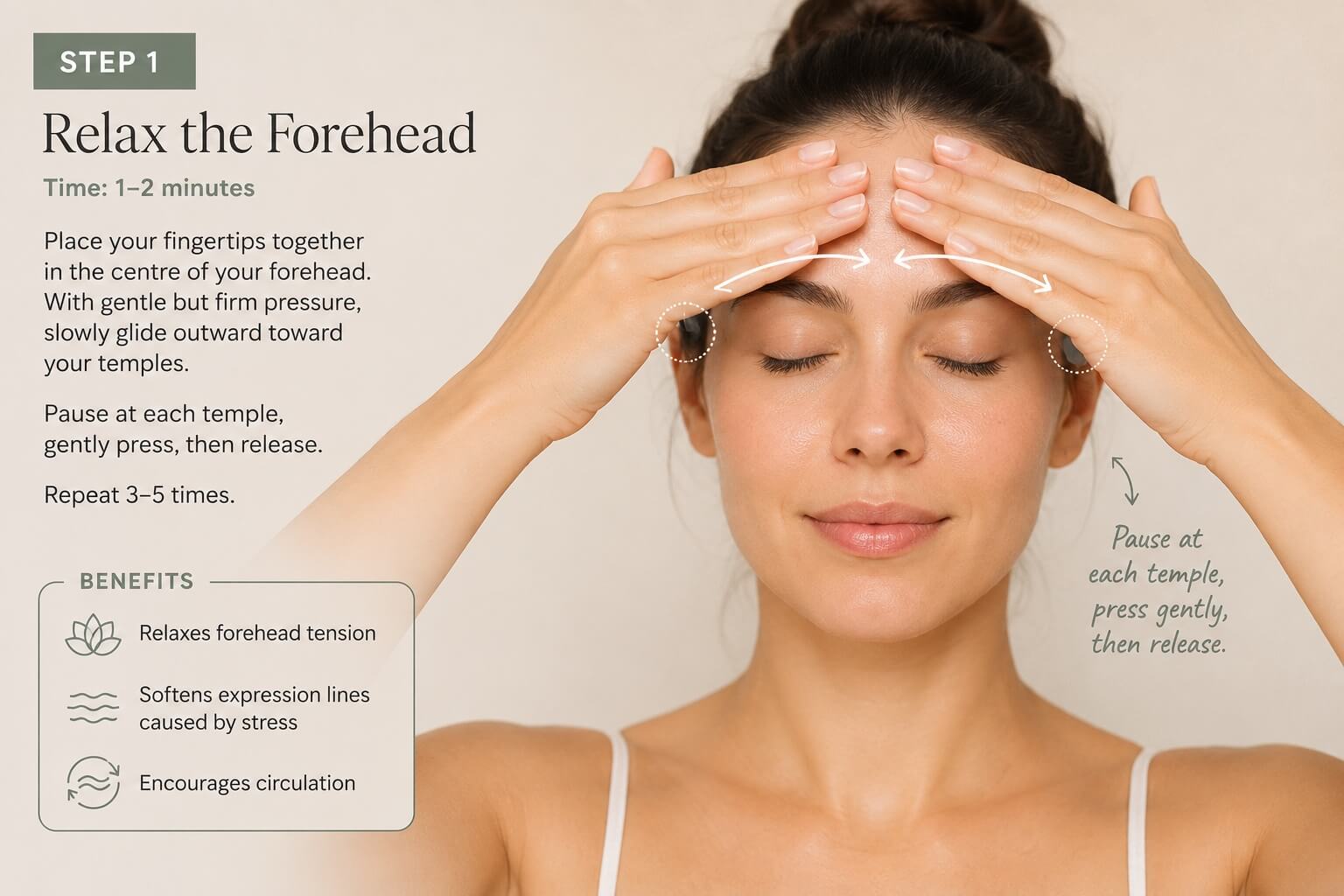
Time: 1–2 minutes
Place your fingertips together in the centre of your forehead.
With gentle but firm pressure, slowly glide outward toward your temples.
Pause at each temple, gently press, then release.
Repeat 3–5 times.
Benefits
- Relaxes forehead tension
- Softens expression lines caused by stress
- Encourages circulation
Step 2: Refresh the Eye Area
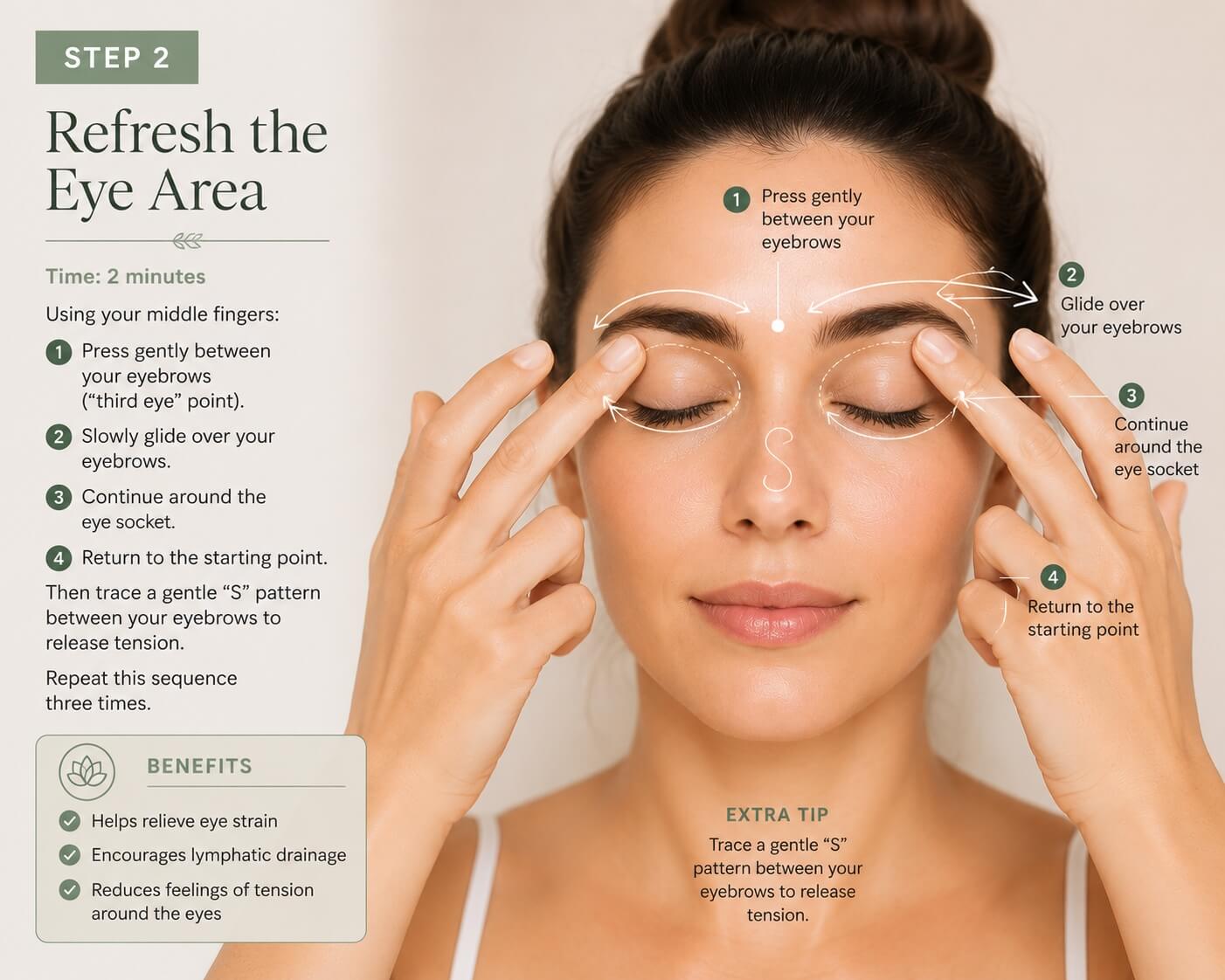
Time: 2 minutes
Using your middle fingers:
- Press gently between your eyebrows (often called the "third eye" point).
- Slowly glide over your eyebrows.
- Continue around the eye socket.
- Return to the starting point.
Then trace a gentle "S" pattern between your eyebrows to release tension.
Repeat this sequence three times.
Benefits
- Helps relieve eye strain
- Encourages lymphatic drainage
- Reduces feelings of tension around the eyes
Step 3: Ease Sinus Pressure
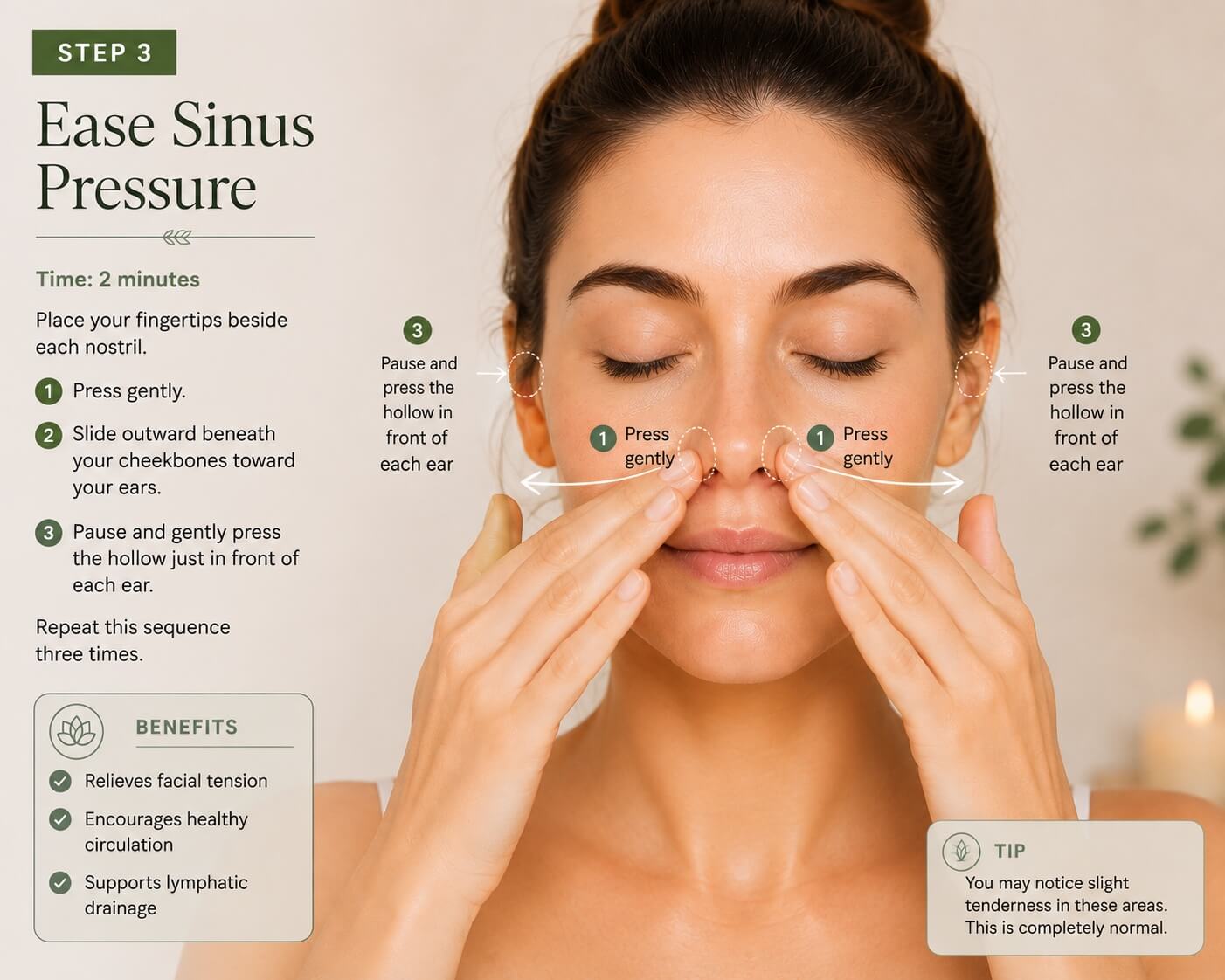
Time: 2 minutes
Place your fingertips beside each nostril.
Press gently.
Slide outward beneath the cheekbones toward your ears.
Pause and gently press the hollow just in front of each ear.
Repeat three times.
You may notice slight tenderness, which is completely normal.
Benefits
- Relieves facial tension
- Encourages healthy circulation
- Supports lymphatic drainage
Step 4: Release Jaw Tension
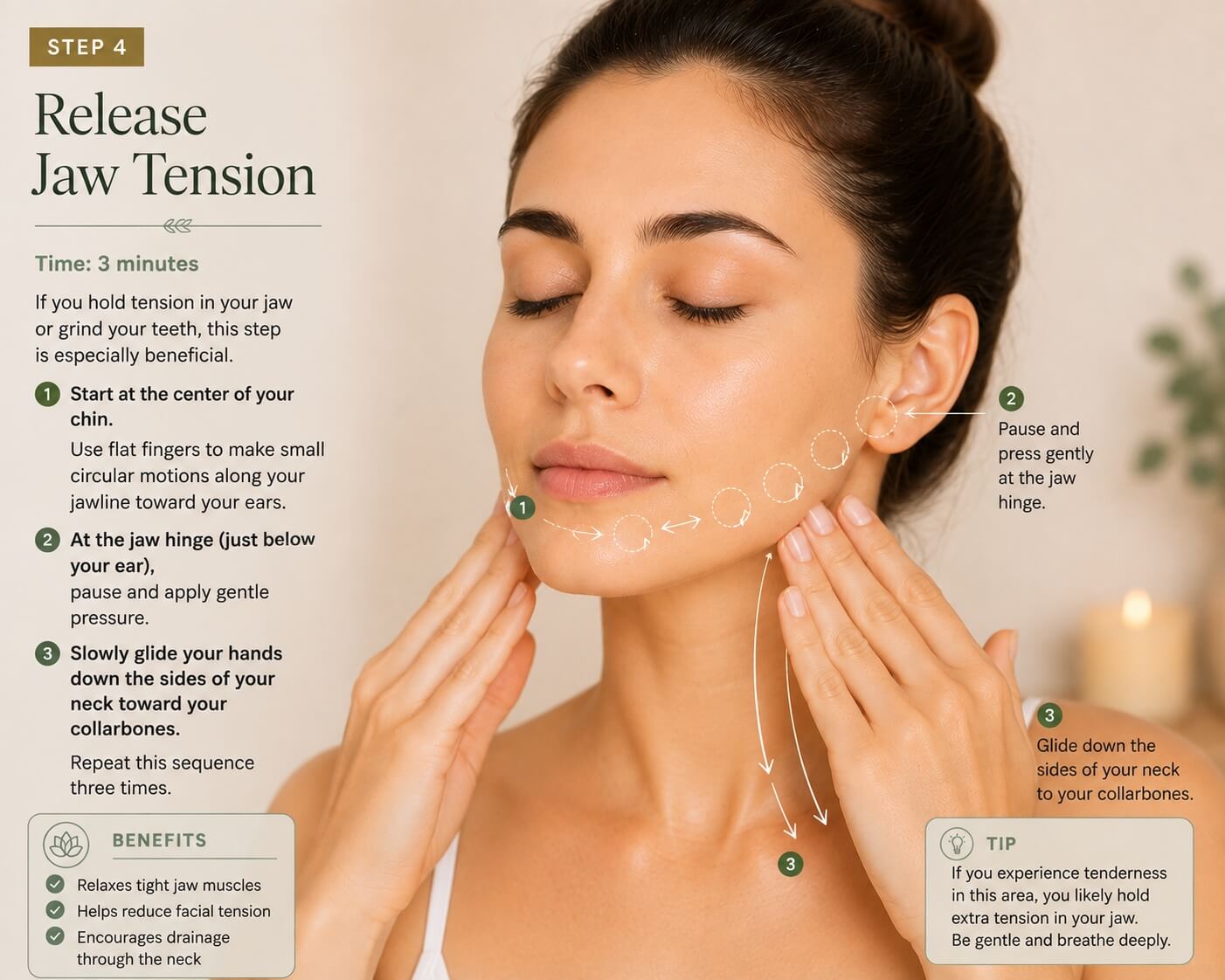
Time: 3 minutes
If you tend to clench your jaw or grind your teeth, this step is especially beneficial.
Starting at the centre of your chin, use flat fingers to make small circular motions along the jawline toward your ears.
When you reach the jaw hinge below the ear, gently press before slowly gliding your hands down the sides of your neck toward your collarbones.
Repeat three times.
Benefits
- Relaxes tight jaw muscles
- Helps reduce facial tension
- Encourages drainage through the neck
Finish With Gentle Neck Strokes
Using both hands, lightly glide from behind your ears down the sides of your neck toward your collarbones several times.
Finish by taking a few slow breaths and relaxing your shoulders.
Your skin should feel refreshed, while your face and jaw should feel noticeably lighter and more relaxed.
Tips for the Best Results
- Perform your massage 2–3 times each week, or whenever you're feeling stressed.
- Always massage on clean skin.
- Avoid pulling or stretching the skin.
- Keep your pressure gentle, a facial massage should never be painful.
- Drink plenty of water afterwards to support overall hydration.
Frequently Asked Questions
Can I do a facial massage every day?
Yes. Gentle facial massage can easily become part of your evening skincare routine, provided you're using light pressure and an appropriate skincare product.
What should I use?
A facial oil, cleansing balm, oil-based serum, or moisturiser all work well, as long as they allow your fingers to glide comfortably across the skin.
Can facial massage replace a professional facial?
Not quite.
An at-home massage is wonderful for relaxation and maintaining your skincare routine, but professional facials offer personalised skin analysis, advanced treatments, professional-grade products, exfoliation, extractions (when appropriate), and techniques tailored specifically to your skin's needs.
Think of home massage as the perfect complement between professional treatments.
Is facial massage good for stress?
Many people find facial massage deeply relaxing because it helps release tension held in the forehead, temples, jaw, and neck while encouraging mindful breathing and self-care. Research also suggests massage can help reduce muscle tension and promote relaxation.
*This massage recipe is from dermalogica international training institute.
If you'd like to have a free skin consultation to help navigate your at home skin care routine, then contact us here and we will set up a FREE virtual consult!